

[KOBE]Photo Report from the Kobe Venue is Now Available
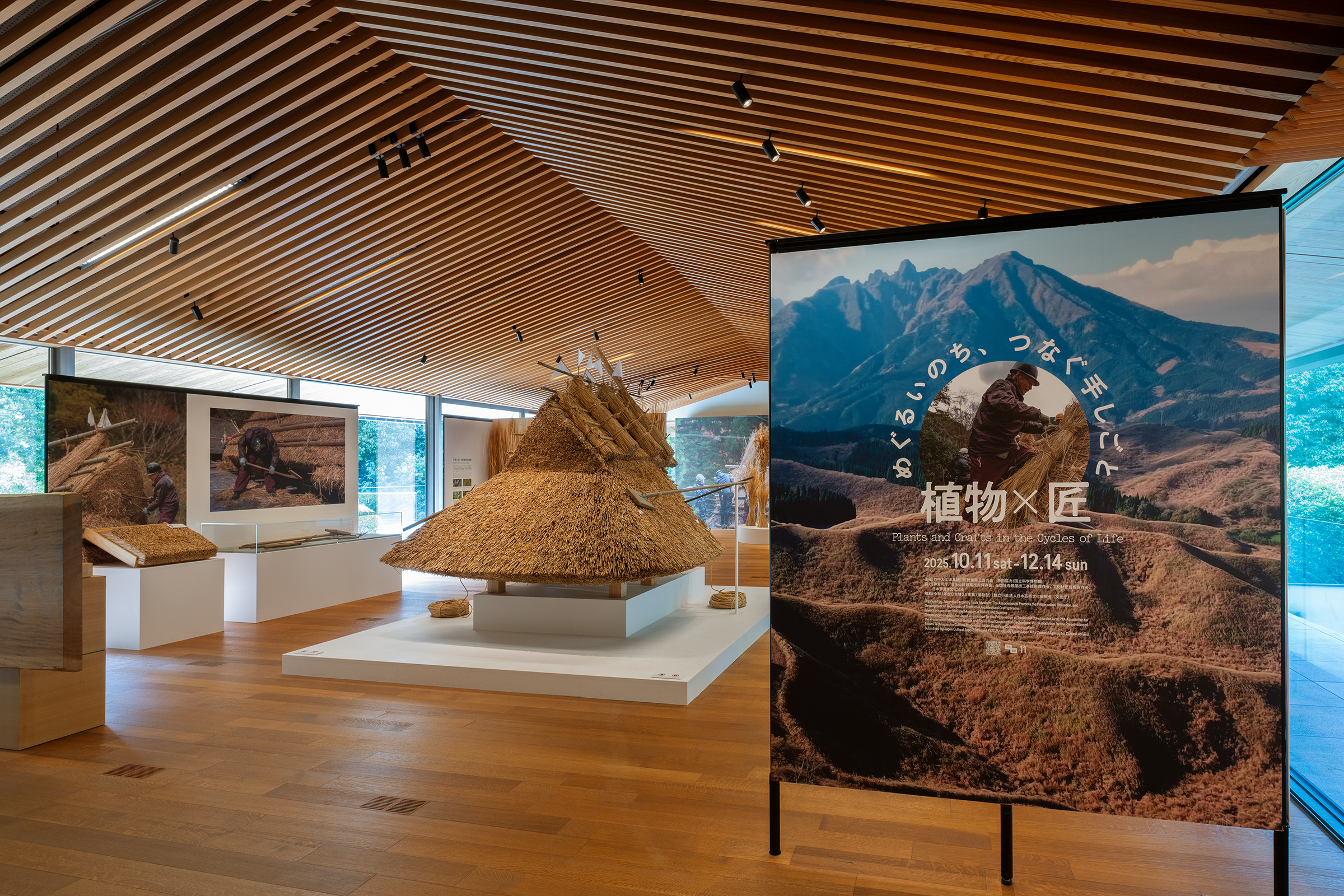
“Plants and Crafts in the Cycles of Life” Exhibition Photo Report
We are pleased to share scenes from the ongoing Kobe venue, accompanied by photographs.
Please note: The Tokyo venue (July–September) has already closed, but the exhibition structure is the same as in Kobe.
At the Kobe venue, the exhibition is organized in connection with the permanent displays (B1 and B2 floors).
Themes by floor:
• 1F Hall: “Roofing”
• B1 & B2 Floors: “Combining” / “Intertwining” / “Connecting” / Video gallery
■〈Roofing〉 — Plants That Shape the Roof (1F)
The techniques of kayabuki (thatch roofing), hiwadabuki (cypress-bark roofing), and kokerabuki (wood-shingle roofing) are introduced, just as in Tokyo.

Specimens of plants commonly used for roofing—silver grass (susuki), reed (yoshi), and wheat straw (an agricultural by-product)—are on display.
Kayabuki (thatch roofing) Corner
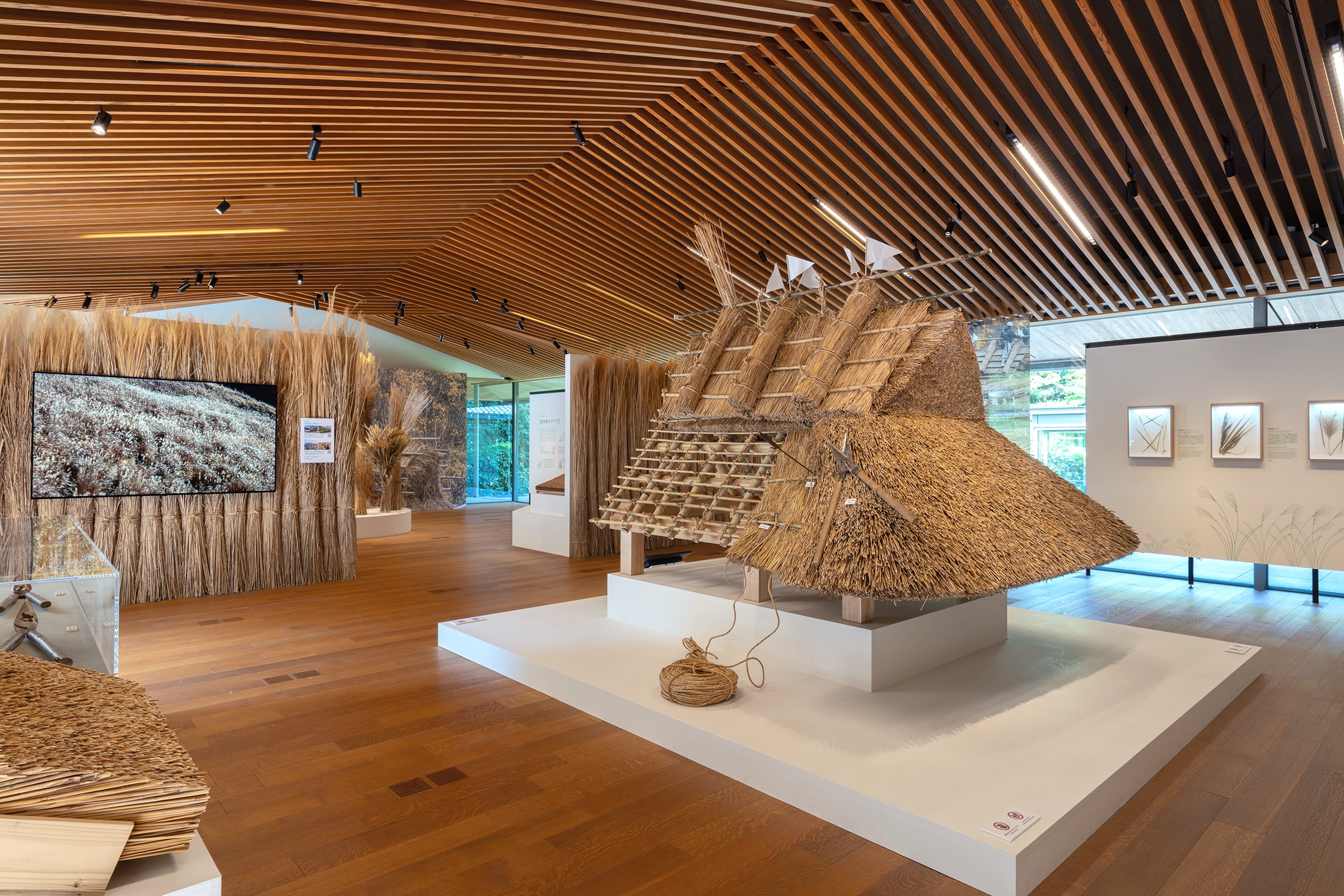
As in Tokyo, visitors can see a large structural model of a thatched roof along with two 4K video works.
Four thatchers from Yusuhara, Kochi Prefecture, came again to Kobe and completed an actual thatching demonstration over four days.
On the final day, the work was presented to visitors as part of the opening event.
Videos shown at the 1F corner (short versions):
• “The Kaya Fields of Ise Jingu” (2 min 25 sec)
• “Kaya at Mt. Aso” (2 min 48 sec)
(The full versions are screened on B2.)
Materials for Kayabuki
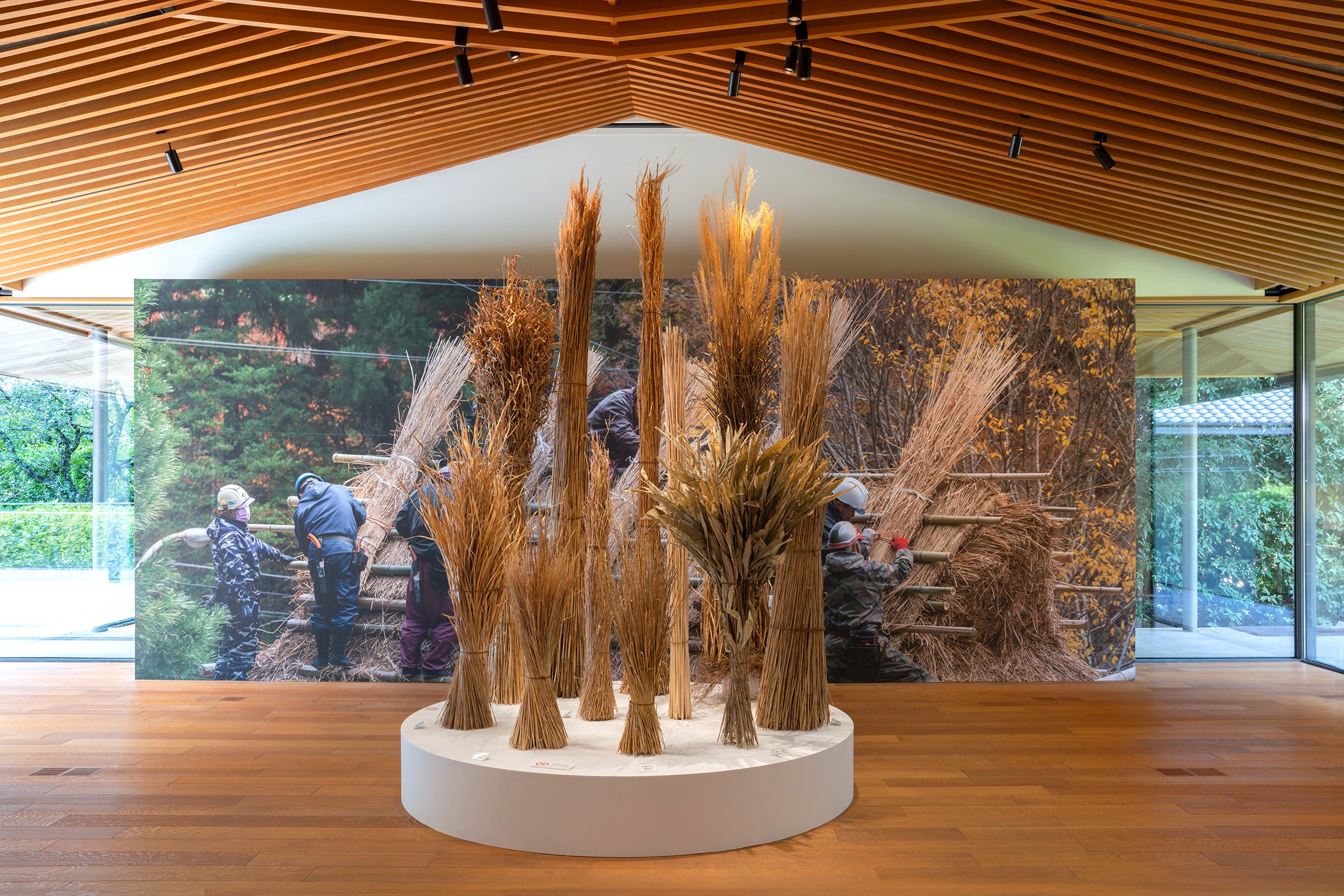
“Kaya” does not refer to one specific plant; it is a general term for grasses used for roofing, such as reed, silver grass, common reed, and shore grass.
The Kobe venue includes additional plant samples—asagara, ogi, chigaya, and shimakaya—which were not exhibited in Tokyo.
Hiwadabuki (cypress-bark roofing) Corner
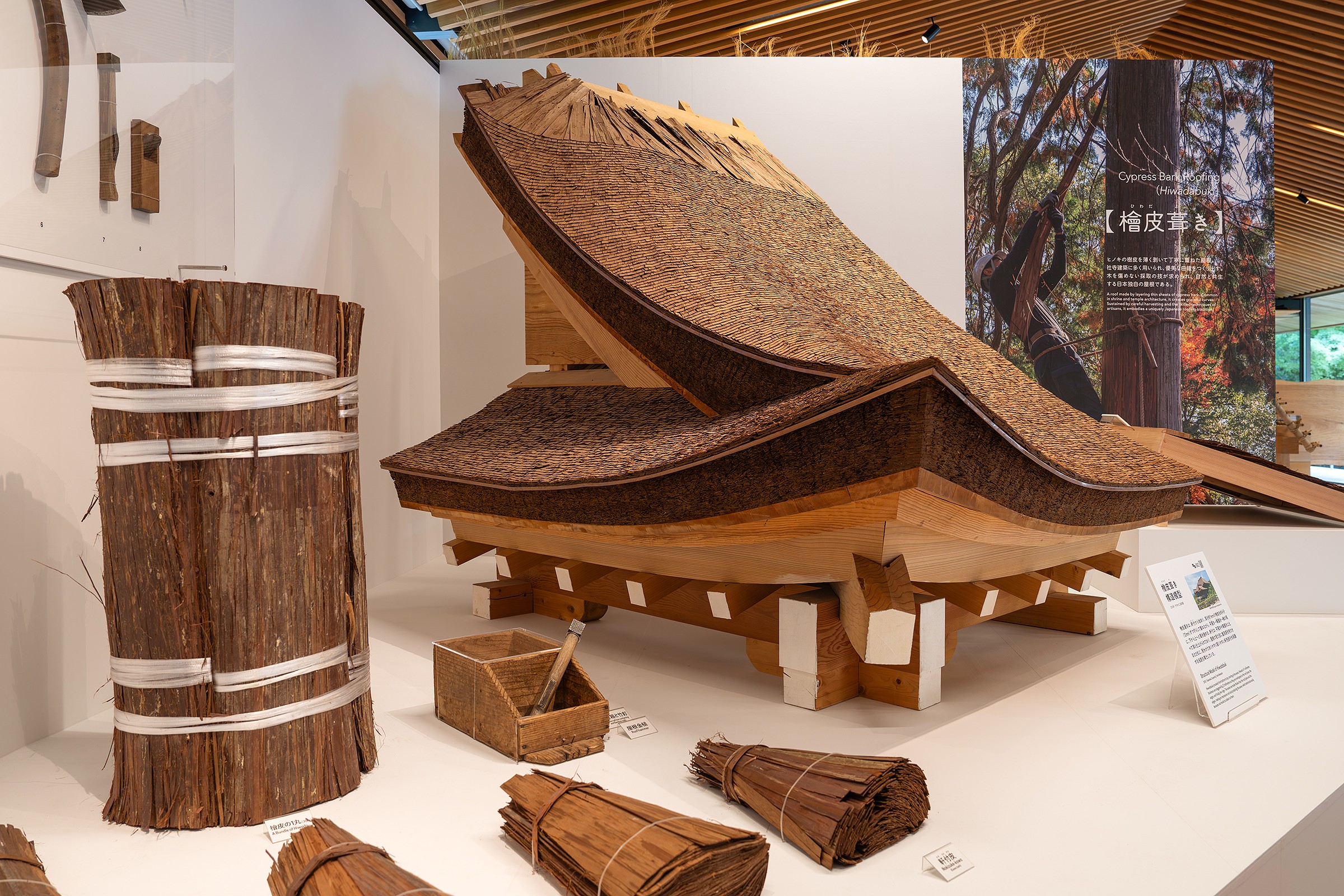
This section features structural models, materials, and tools used for cypress-bark roofing, along with a video explaining how they are used.
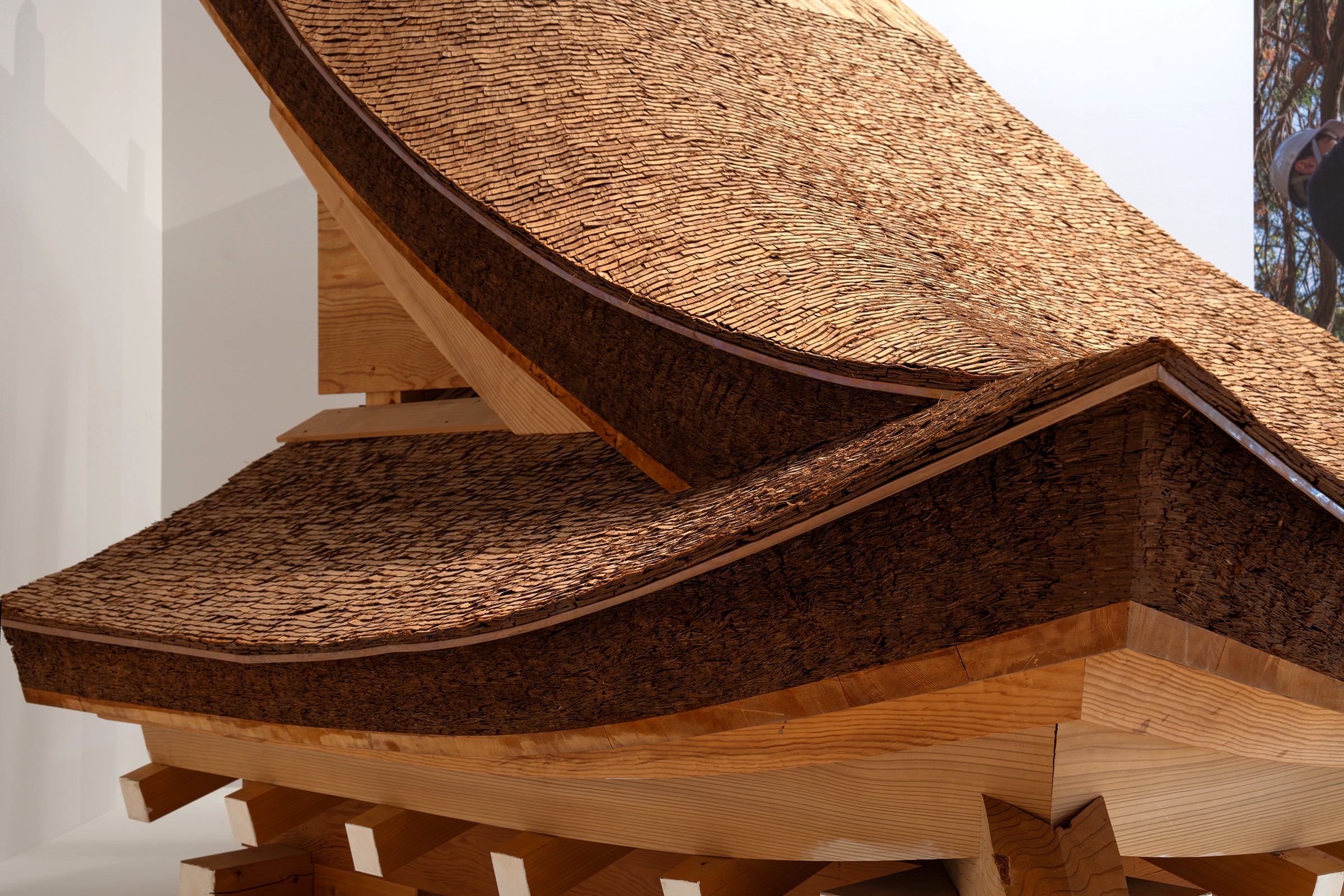
Visitors can clearly appreciate the technique that creates elegant curves using the bark of Japanese cypress.
Kokerabuki (wood-shingle roofing) Corner
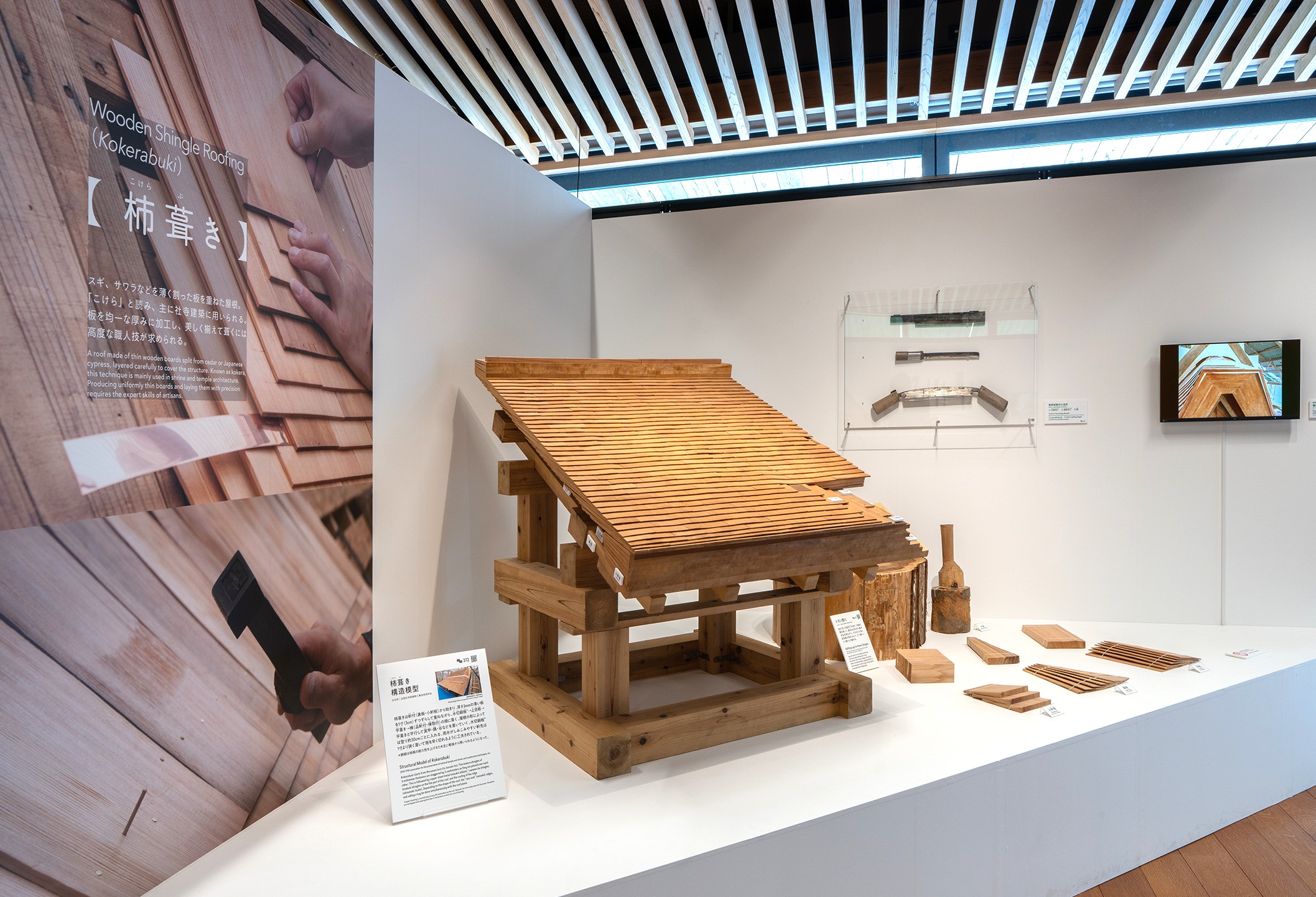
Models, materials, tools, and a concise explanatory video introduce the process of wooden-shingle roofing.
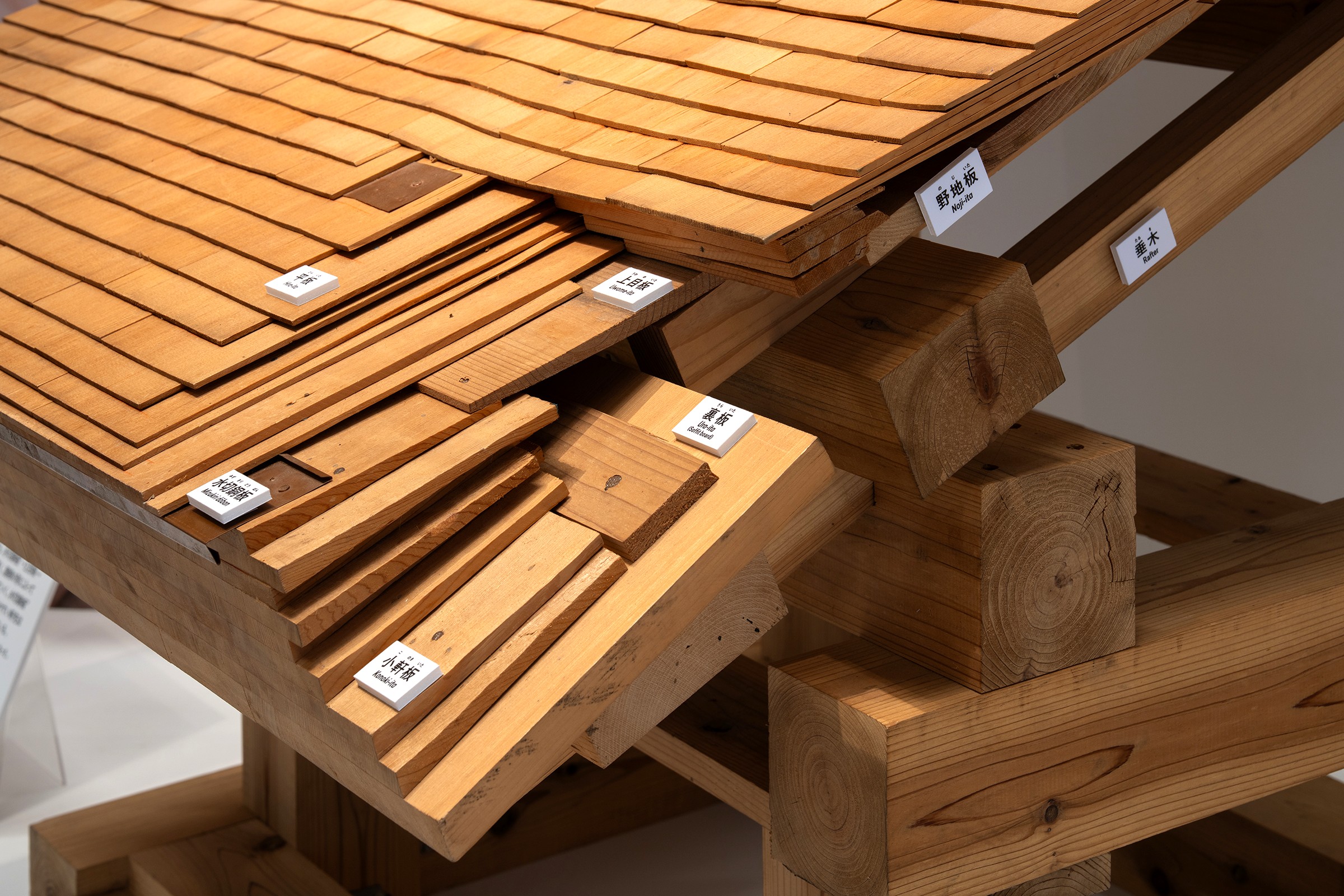
The model shows each step—starting from the eaves boards, layering 3 mm-thick shingles with a 3 cm offset, inserting copper water-drip plates (every 30 cm), then placing upper boards, followed by flat shingles and finally the ridge.
■〈Combining〉 — Techniques of Joining Wood (B1 & B2)
B1 Floor
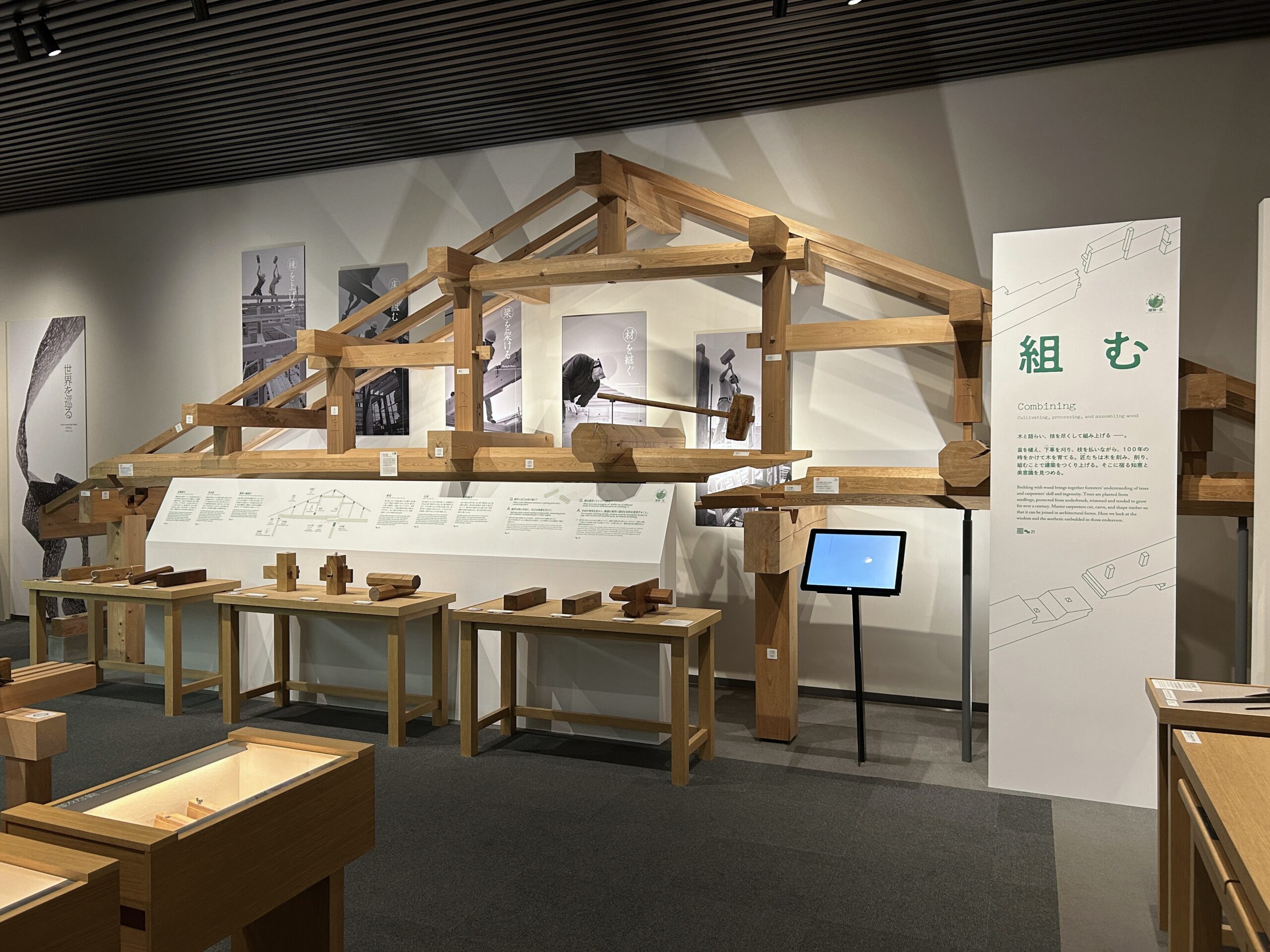
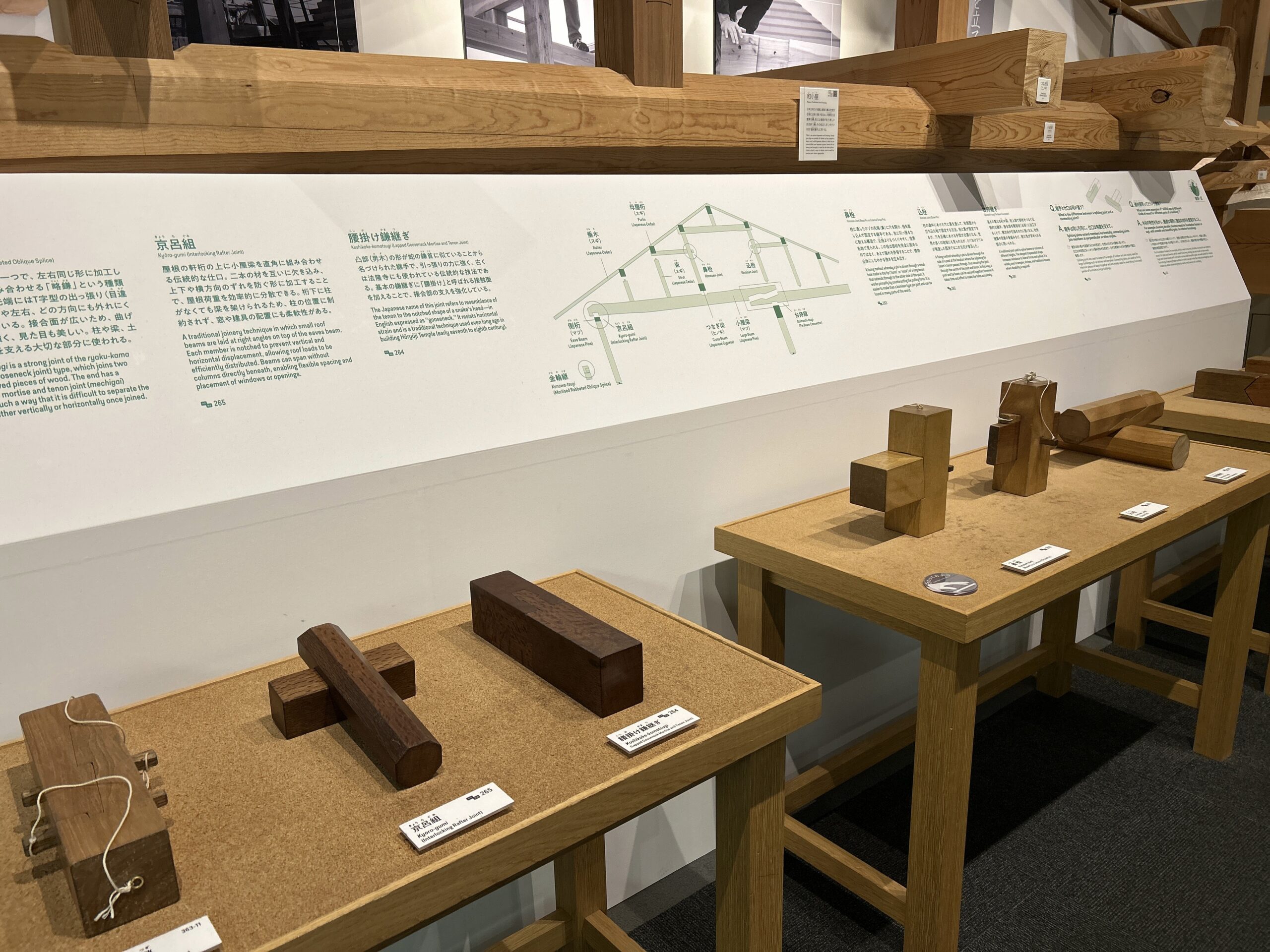
Linked to the permanent exhibition “The Wooden House Structure”, this area shows where various traditional joints—such as koshikake-kamatsugi (Lapped Gooseneck Mortise and Tenon Joint) and kanawa-tsugi (Mortised Rabbeted Oblique Scarf Joint)—are used in actual buildings. Visitors can also pick up and assemble the joints themselves.
B2 Floor
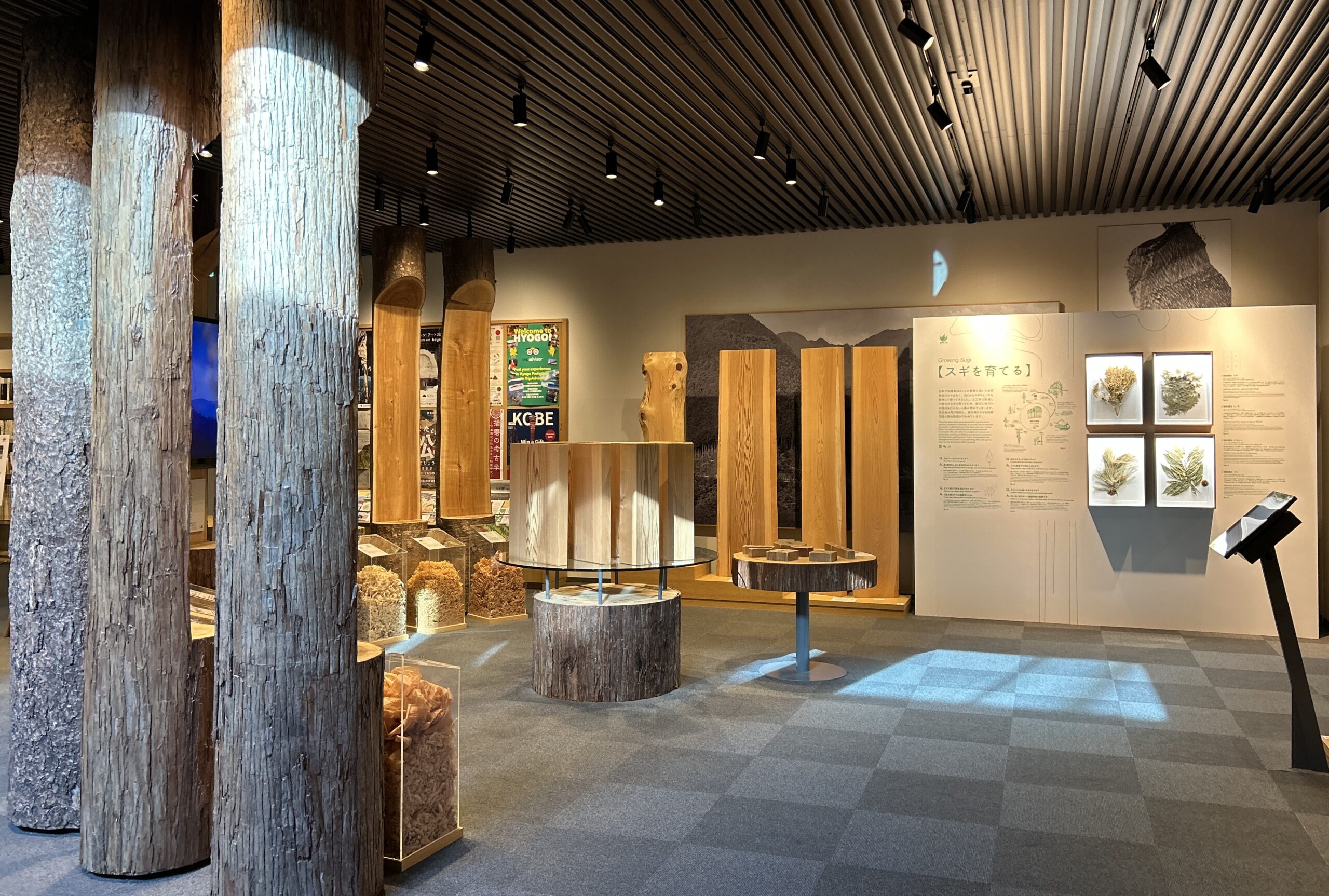

Wood species used in architecture and their Plane shavings are displayed so visitors can enjoy their fragrance.
In addition to the four species shown in Tokyo (cedar, cypress, red pine, chestnut), Kobe adds hiba, tsuga, keyaki, and sakura, offering an even richer selection.
■〈Intertwining〉 — Weaving with Bamboo and Grasses (B2)
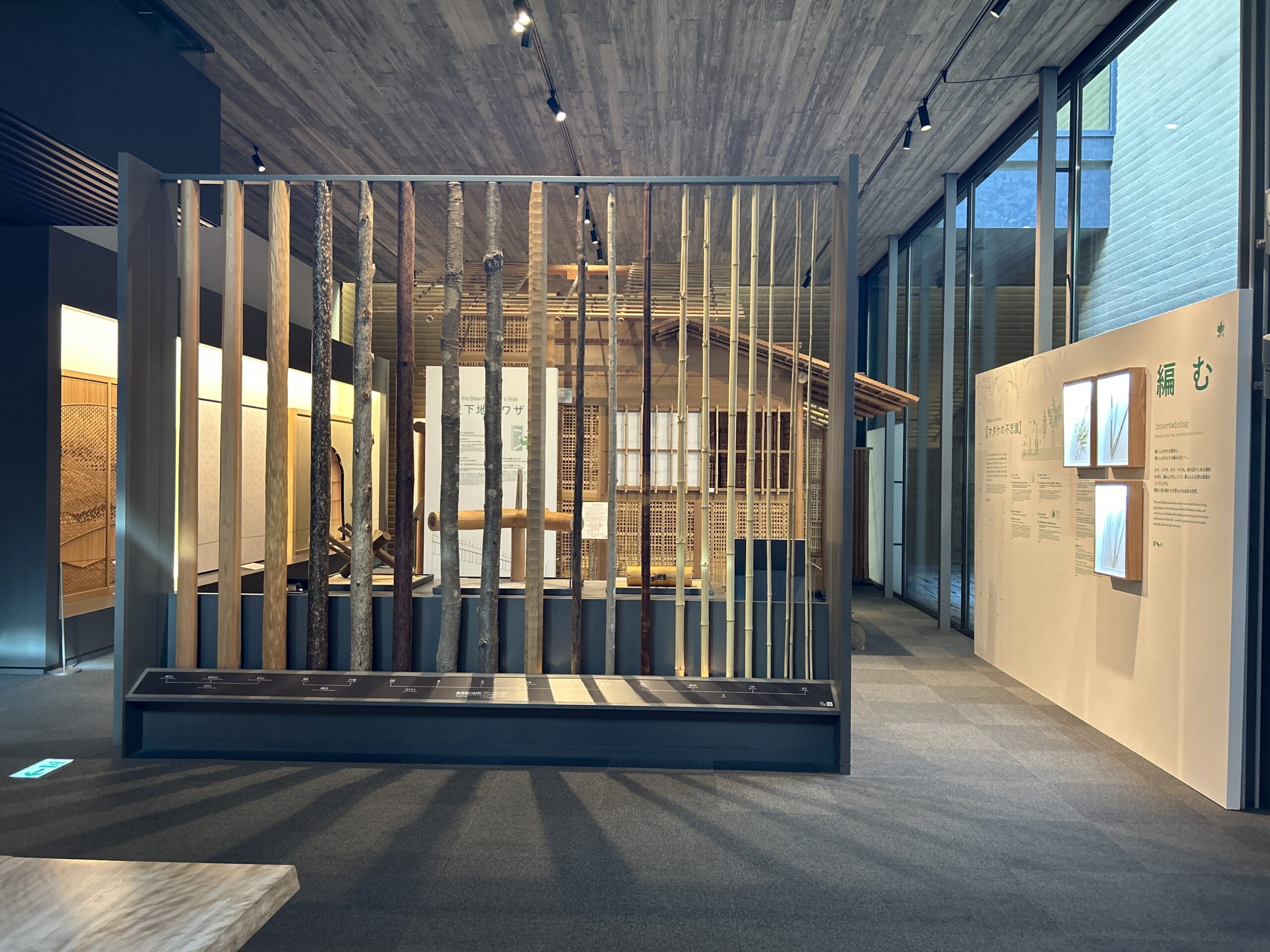
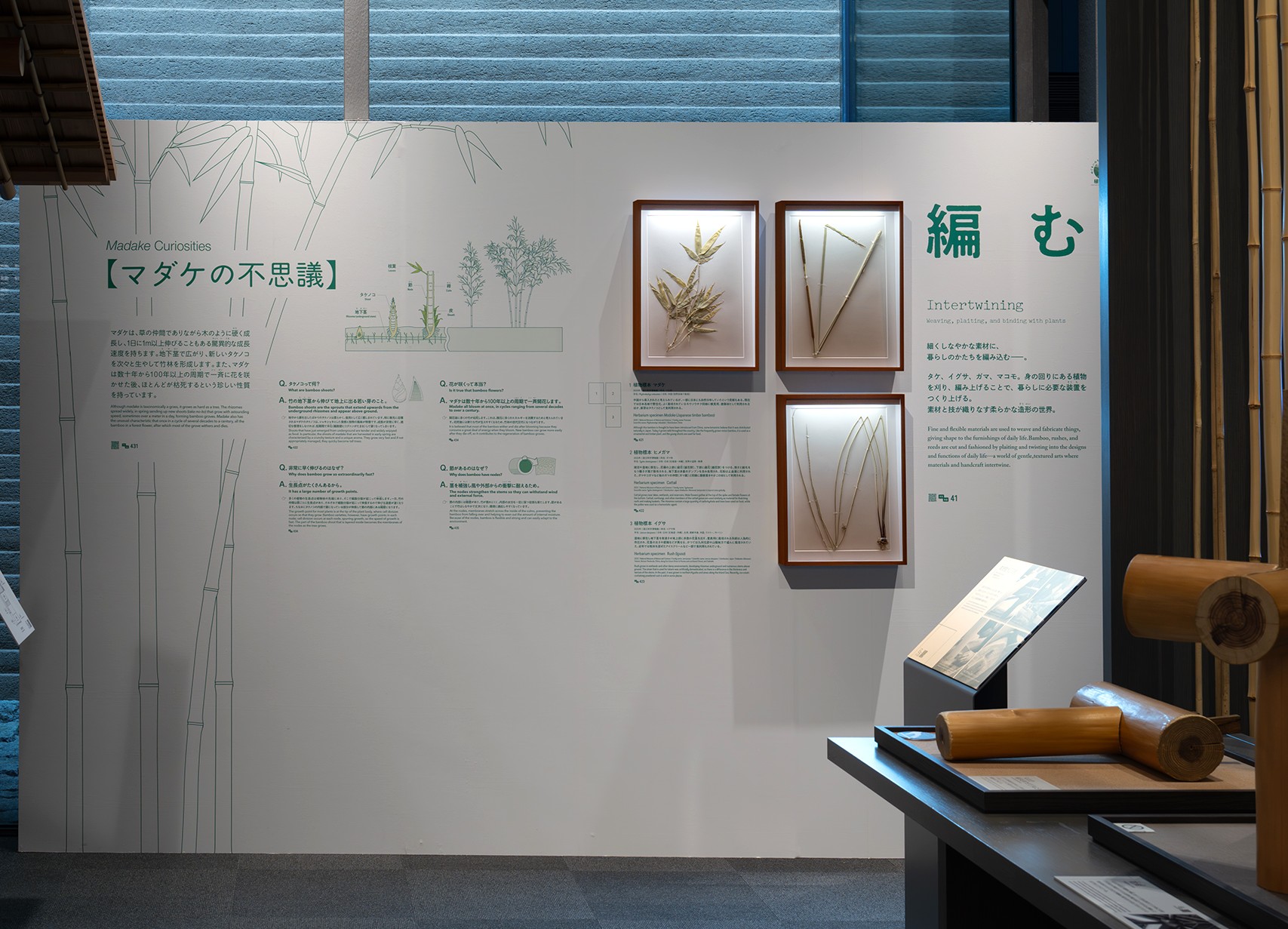
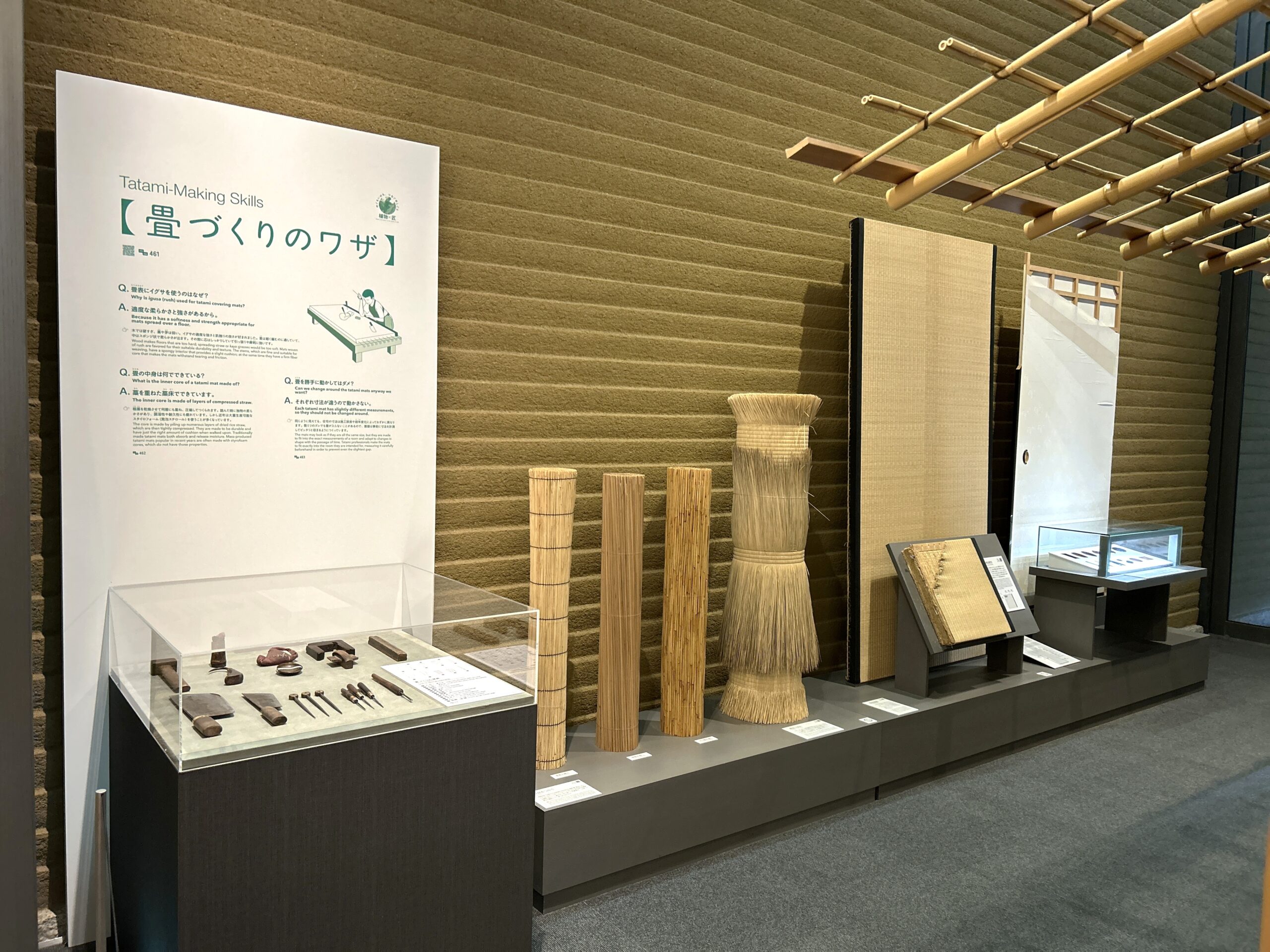
Connected with the permanent “Traditions of Japanese Aesthetics” gallery, this section features a skeletal tea-room model, plant specimens of bamboo, igusa (rush), himegama (cattail), as well as explanations of wall under-structures and tatami.
■〈Connect〉 — Connecting Plants, People, and the Future (B2)
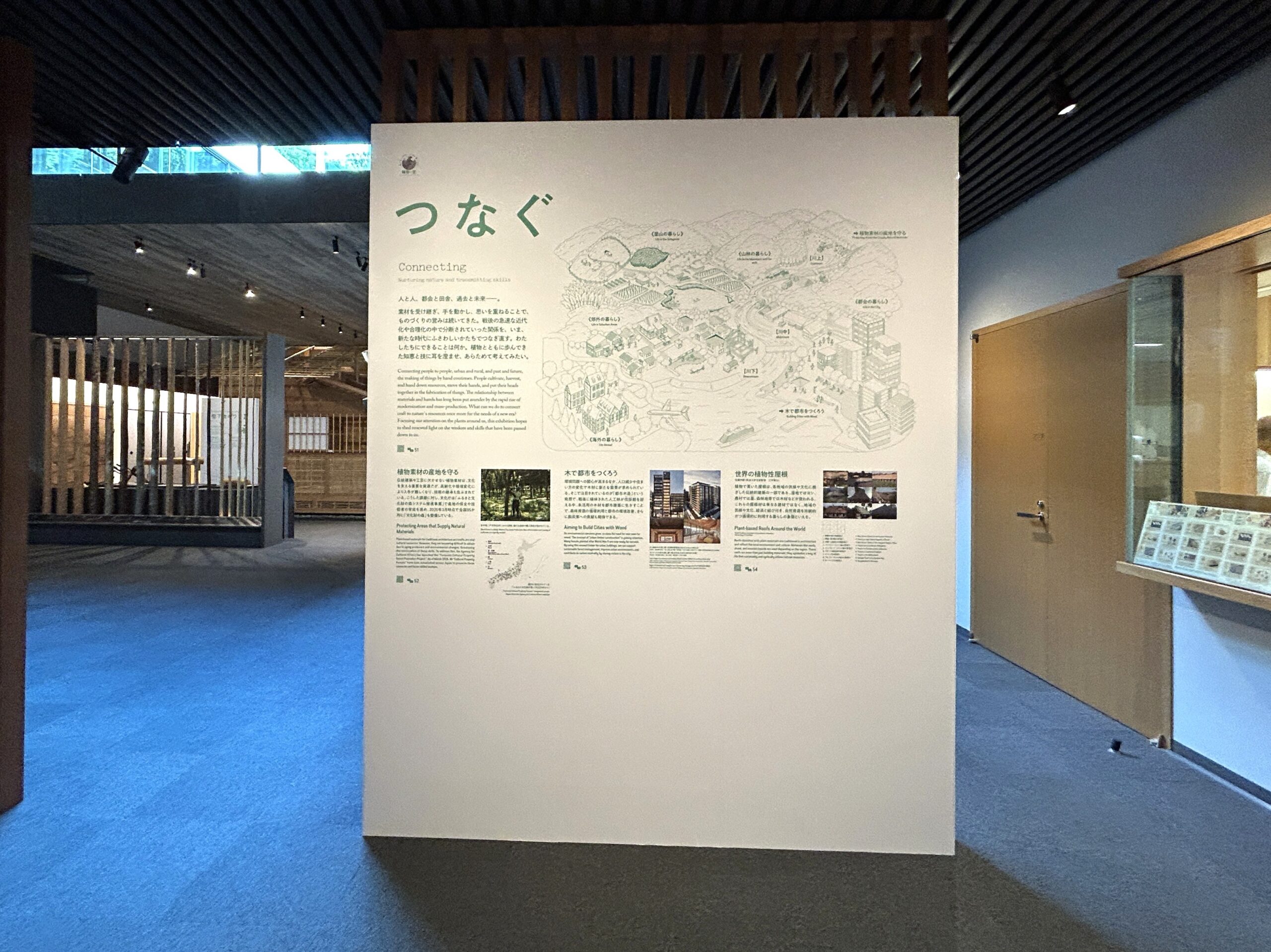
Located beside the Video Library and behind the bookshelf, this corner presents perspectives on the relationship between people and plants, and how that connection extends into the future.
■ Video Gallery (B2)
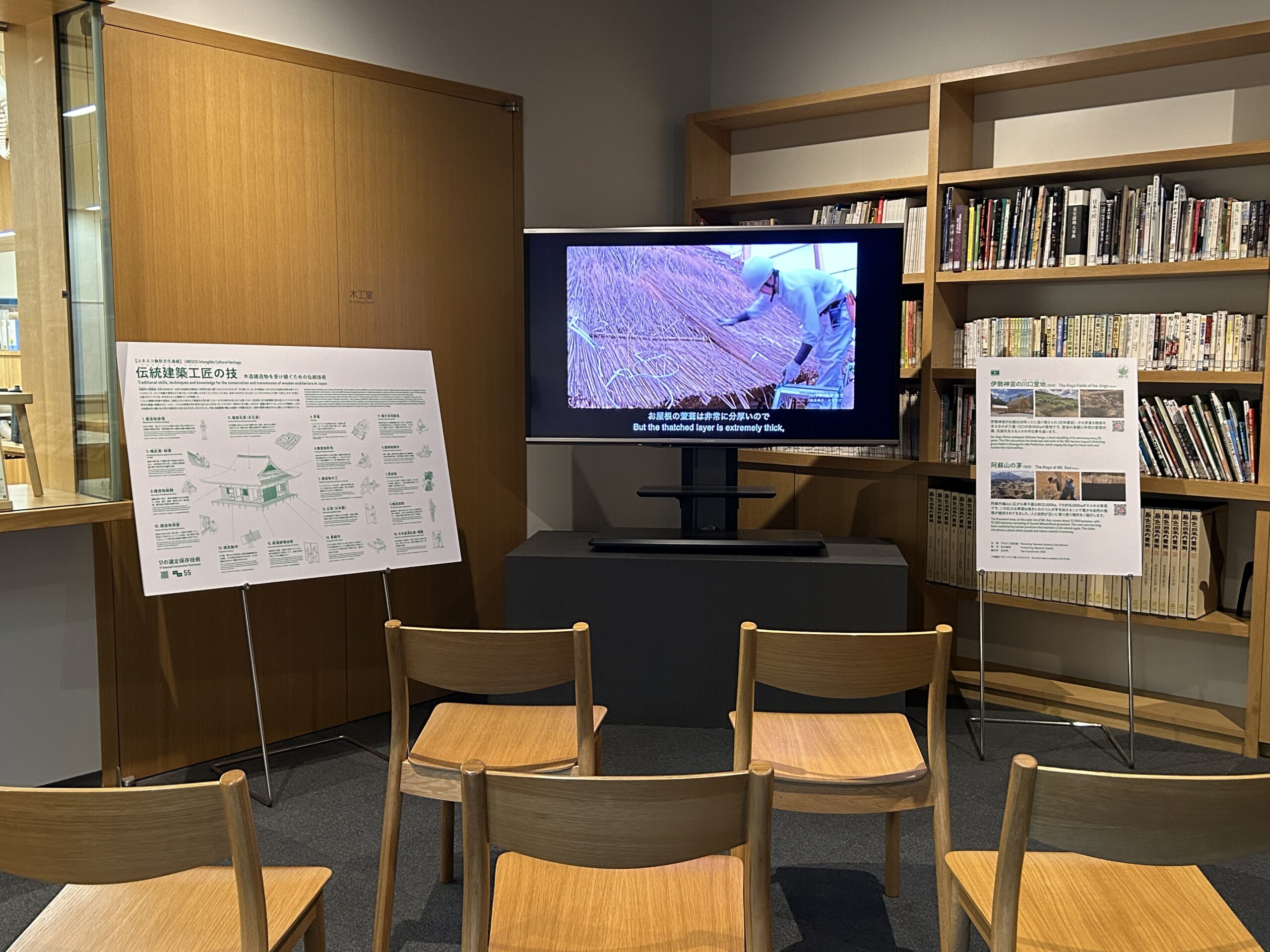
The full versions of the videos shown in shortened form on the 1F “Roofing” corner are screened here.
Visitors can sit and watch at their leisure.
Screenings:
• “The Kaya Fields of Ise Jingu” (full version, 9 min 52 sec)
• “Kaya at Mt. Aso” (full version, 15 min)
Thanks to its integration with the permanent exhibitions, the Kobe venue offers more exhibits, making the content easier to understand and more interactive. It is a rare opportunity to observe, at eye level, the structure of roofs made from plants that are seldom seen in everyday life.
The exhibition runs until Sunday, December 14. Don’t miss it!
👉More info: https://plantsandcrafts.dougukan.jp/